Maintenance & DIY Tutorials · August 12, 2026
How to Lubricate Door Hinges, Locks and Weather Seals
Small amounts of the correct lubricant can quiet hinges and protect rubber without coating the interior in overspray.
Disclosure: This guide may contain affiliate links. If you purchase through a qualifying link, Motor Parts Guide may earn a commission at no additional cost to you. Learn more.
It usually starts with a small moment: a driver door starts creaking after a dusty summer, a little less time than expected, and a car that needs to do its job without fuss. That is the situation we had in mind while researching this guide.
Start with the job you need done
A precision applicator, silicone-safe seal treatment and shop towels keep products where they belong. Before comparing brands, check your vehicle manual, measure the space where the item will live, and decide how often you will realistically use it. Those three steps rule out a surprising number of poor purchases.
A practical step-by-step approach
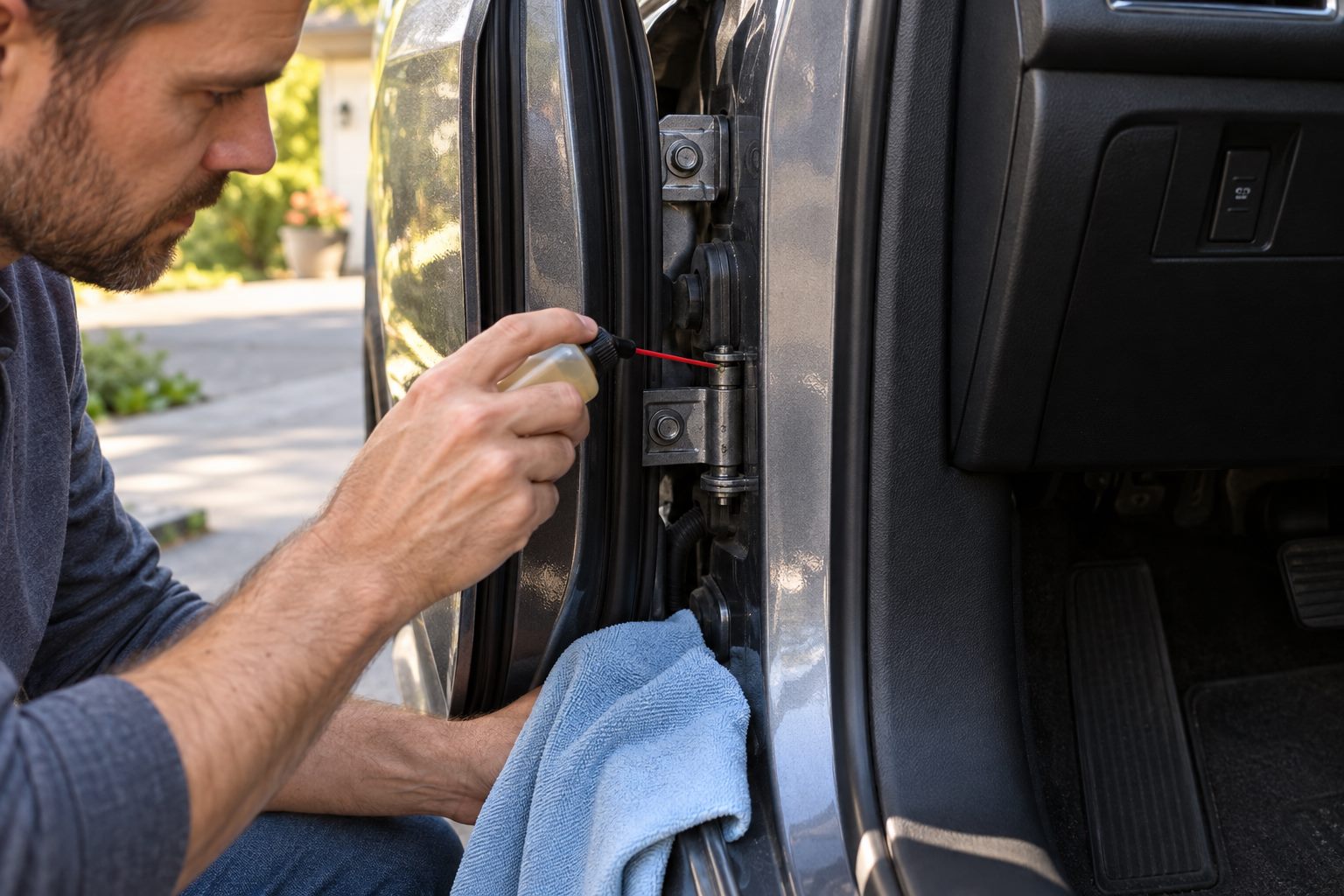
- Clean grit from hinge pivots, latches and rubber seals with a cloth before applying product.
- Choose a lubricant specifically compatible with each material and vehicle instruction.
- Apply sparingly to the target, move the door or latch several times and wipe away excess.
- Check that drains, sensors and painted surfaces remain clean.
Safety note: Avoid spraying near pedals, brake components, glass or surfaces where slipperiness creates a hazard.
What to compare before buying
Look for clear fitment information, instructions that match your vehicle and a return policy you can understand. Published specifications are useful, but they only matter when they suit your own routine. A commuter, a family hauling sports gear, and a weekend DIYer may make different sensible choices.
- Prioritize quality and compatibility over a marketing-heavy feature list for door hinges.
- Prioritize quality and compatibility over a marketing-heavy feature list for weather seals.
- Prioritize quality and compatibility over a marketing-heavy feature list for automotive lubricant.
The tradeoff worth knowing
One lubricant is rarely ideal for metal pivots, lock cylinders and rubber seals. This is not a category where the most expensive choice automatically solves every problem. Buy for the scenario in front of you and leave room in the budget for installation, maintenance, or professional help when safety is involved.
Before you order
Save the part number, confirm the return window, and take a quick photo of the existing setup. That short preparation makes it far easier to compare an item when it arrives. For brakes, electrical systems, lifting a vehicle, or anything you are unsure about, use a qualified technician.