Maintenance & DIY Tutorials · September 1, 2026
How to Inspect Brake Pads Through the Wheel
A visual brake check can reveal obvious wear, but it does not replace measurement or diagnosis when symptoms appear.
Disclosure: This guide may contain affiliate links. If you purchase through a qualifying link, Motor Parts Guide may earn a commission at no additional cost to you. Learn more.
It usually starts with a small moment: looking into the wheels after hearing a new scraping sound in stop-and-go traffic, a little less time than expected, and a car that needs to do its job without fuss. That is the situation we had in mind while researching this guide.
Start with the job you need done
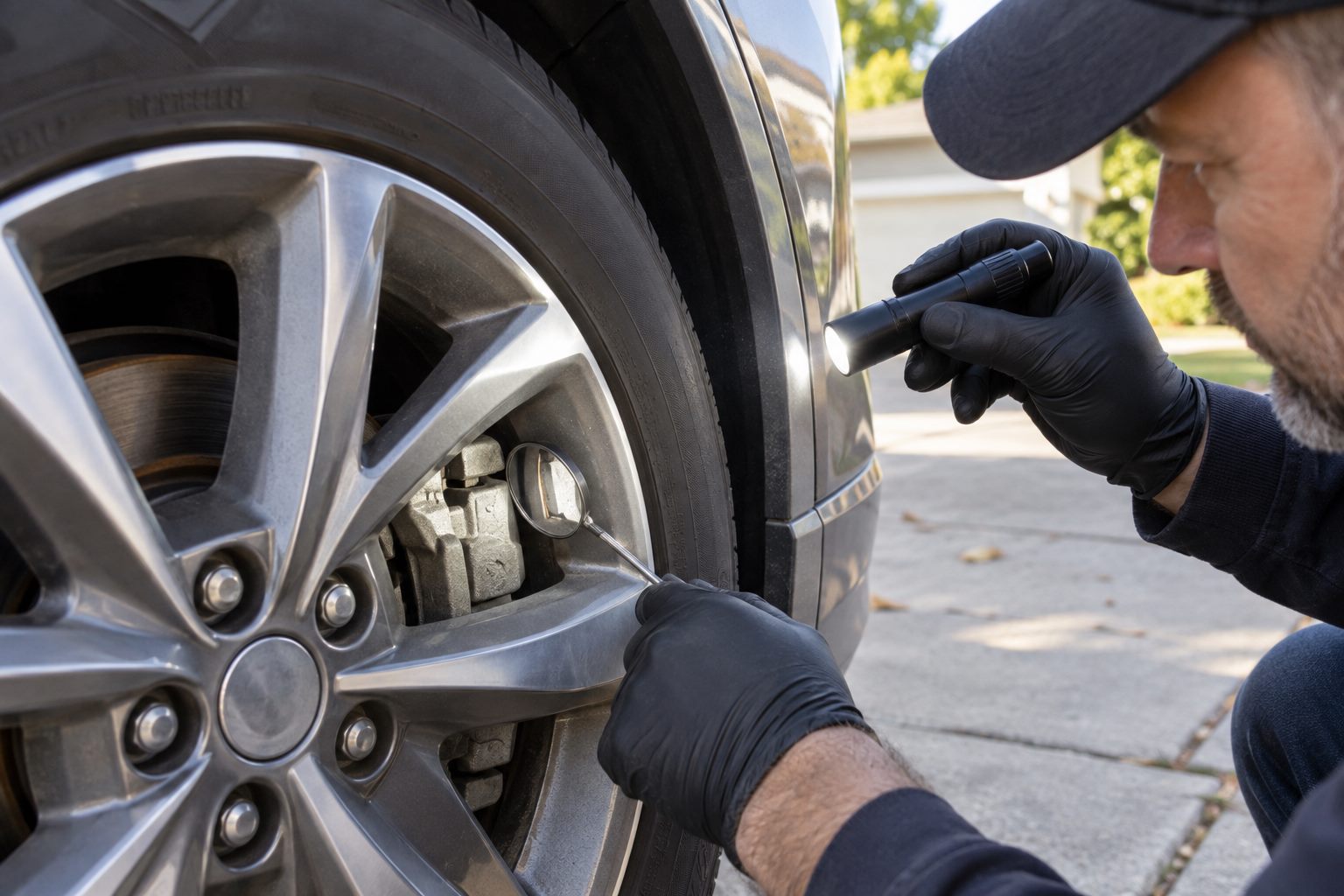
A bright inspection light and small mirror help with a preliminary look without disassembly. Before comparing brands, check your vehicle manual, measure the space where the item will live, and decide how often you will realistically use it. Those three steps rule out a surprising number of poor purchases.
A practical step-by-step approach
- Park safely, let the brakes cool and use a light to locate the caliper, pad material and visible rotor surface.
- Compare both sides for uneven wear, deep scoring, cracks, heavy rust or signs of fluid.
- Record what you can see and compare it with the service limit in authoritative vehicle information.
- Arrange a complete inspection promptly when wear is unclear or any braking symptom persists.
Safety note: Do not drive a vehicle with grinding, fluid leakage, a soft pedal or reduced braking response.
What to compare before buying
Look for clear fitment information, instructions that match your vehicle and a return policy you can understand. Published specifications are useful, but they only matter when they suit your own routine. A commuter, a family hauling sports gear, and a weekend DIYer may make different sensible choices.
- Prioritize quality and compatibility over a marketing-heavy feature list for brake pads.
- Prioritize quality and compatibility over a marketing-heavy feature list for rotor inspection.
- Prioritize quality and compatibility over a marketing-heavy feature list for brake noise.
The tradeoff worth knowing
Pad material can be difficult to see, and the inner pad may wear differently from the outer pad. This is not a category where the most expensive choice automatically solves every problem. Buy for the scenario in front of you and leave room in the budget for installation, maintenance, or professional help when safety is involved.
Before you order
Save the part number, confirm the return window, and take a quick photo of the existing setup. That short preparation makes it far easier to compare an item when it arrives. For brakes, electrical systems, lifting a vehicle, or anything you are unsure about, use a qualified technician.