Maintenance & DIY Tutorials · September 5, 2026
How to Check Tire Pressure and Set It for a Cold Morning
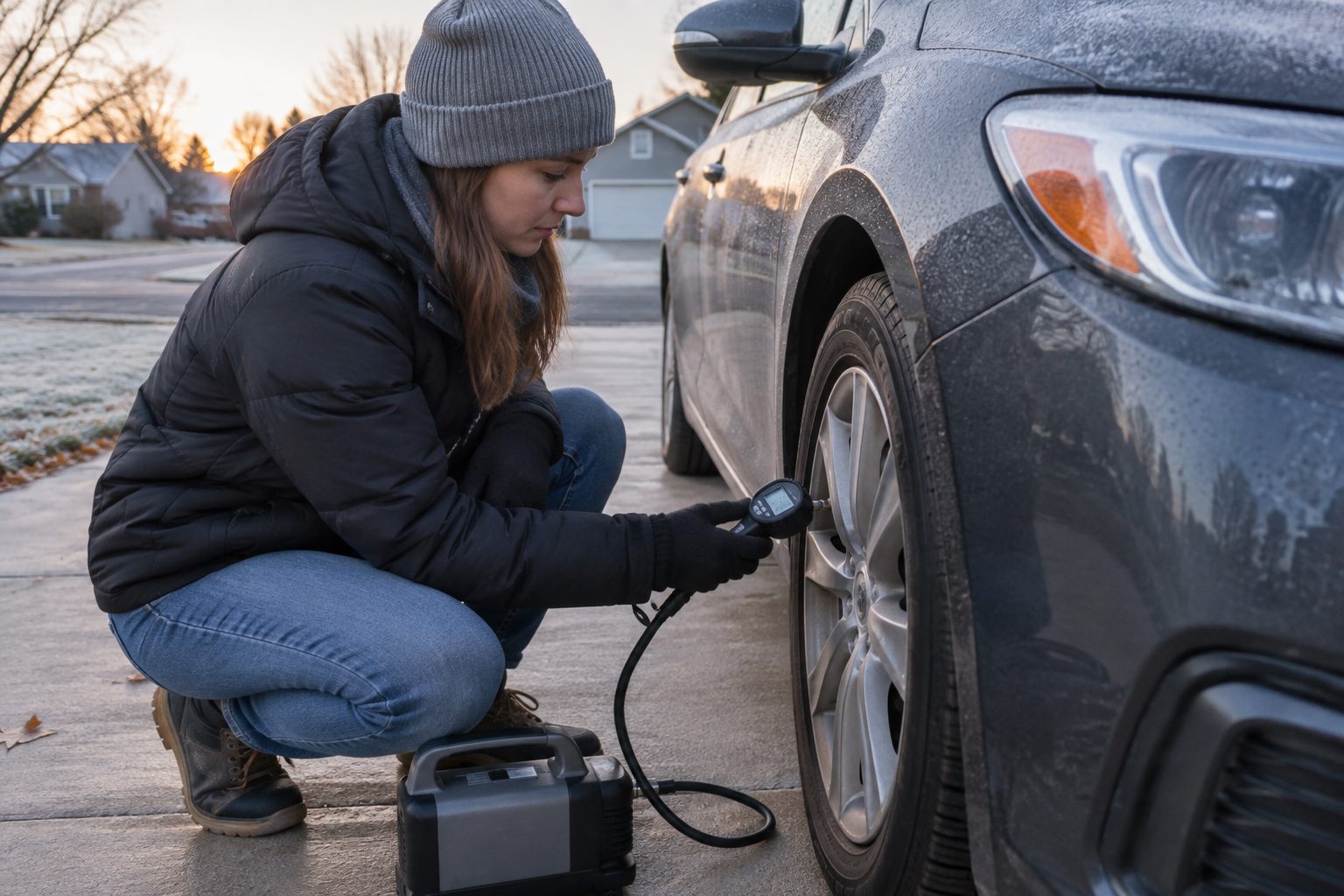
Use the door-jamb specification—not the tire sidewall maximum—to set pressure before the day warms up.
Disclosure: This guide may contain affiliate links. If you purchase through a qualifying link, Motor Parts Guide may earn a commission at no additional cost to you. Learn more.
It usually starts with a small moment: checking all four tires before an early highway commute, a little less time than expected, and a car that needs to do its job without fuss. That is the situation we had in mind while researching this guide.
Start with the job you need done
A digital gauge with a readable display and a compact inflator is convenient for home checks. Before comparing brands, check your vehicle manual, measure the space where the item will live, and decide how often you will realistically use it. Those three steps rule out a surprising number of poor purchases.
A practical step-by-step approach
- Find the recommended cold pressures on the driver-door placard and note that front and rear values may differ.
- Measure before driving or after the vehicle has been parked long enough for the tires to cool.
- Add or release air in small amounts, recheck each reading and replace every valve cap.
- Reset the tire-pressure monitor only as the manual directs and inspect any tire that repeatedly loses pressure.
Safety note: Do not inflate to the maximum pressure printed on the tire sidewall unless the vehicle specification explicitly calls for it.
What to compare before buying
Look for clear fitment information, instructions that match your vehicle and a return policy you can understand. Published specifications are useful, but they only matter when they suit your own routine. A commuter, a family hauling sports gear, and a weekend DIYer may make different sensible choices.
- Prioritize quality and compatibility over a marketing-heavy feature list for tire pressure.
- Prioritize quality and compatibility over a marketing-heavy feature list for digital gauge.
- Prioritize quality and compatibility over a marketing-heavy feature list for cold tires.
The tradeoff worth knowing
Small gauges are easy to store but can be harder to hold squarely on short valve stems. This is not a category where the most expensive choice automatically solves every problem. Buy for the scenario in front of you and leave room in the budget for installation, maintenance, or professional help when safety is involved.
Before you order
Save the part number, confirm the return window, and take a quick photo of the existing setup. That short preparation makes it far easier to compare an item when it arrives. For brakes, electrical systems, lifting a vehicle, or anything you are unsure about, use a qualified technician.